
Are you excited for a smarter home? Just one question – is your data completely protected? Smart meter privacy and data protection smart grid issues are taking center stage – because in a world where data is the new oil, there’s a scramble to harvest yours before authorities can catch up. No doubt many Australians are wondering, “Is my personal information truly safe with this advanced system?”
Let’s dive into the security concerns around smart meters – including real electricity usage tracking risks – and the way to take control without giving up your privacy.
A Quick Summary
Smart meter privacy is now a major concern in Australia as digital meters are taking over the mainstream. This guideline explains the major electricity usage trackingrisks, how data is shared, and shares useful actions to help boost data safety and make sure that robust data protection smart grid measures are in place.
What is Smart Meter Privacy?
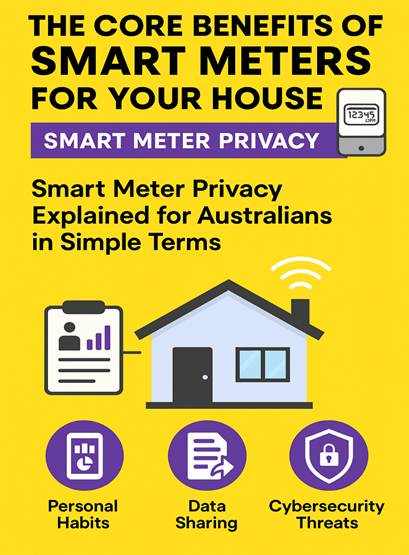
- Smart Meter Privacy Explained for Australians in Simple Terms
Smart meters are advanced digital devices that continuously monitor your power consumption and transmit data straight to your energy retailer. Unlike traditional meters, these cutting-edge tools not only provide real-time visibility but also draw much more information, including detailed patterns of your consumption throughout the day.
So, what’s the catch?
Every piece of data can unveil application usage, personal routines, and even when your household is vacant. Have a quick glance at what’s at stake –
- Personal habits: Smart meters record detailed consumption patterns, providing insights into your day-to-day life.
- Data sharing: Energy retailers might distribute this information to external companies.
- Cybersecurity threats: Breaches in the smart grid may result in unauthorised access to your data.
Simply put, smart meter privacymeans making sure that this valuable data isn’t leaked or misused.
Expert Take: “Privacy isn’t restricted to data storage – it involves permission, personal control and confidence. Australians deserve more transparency and greater safeguards.”
- Dr. Emily Watson, Cyber Policy Lead, Australian Privacy Foundation
How Smart Meters Gather and Share Data
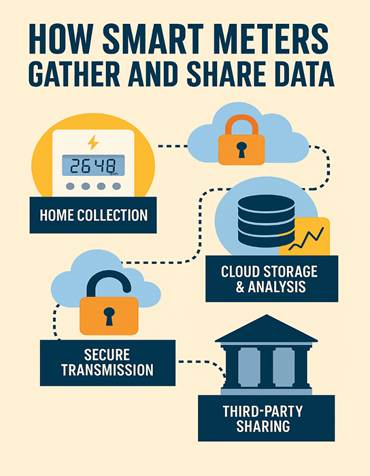
- Smart Grid Data Security: Breaking It Down
The smart grid counts on a complex system, which shifts your data from your meter to electricity retailers – and sometimes beyond. Here’s what goes on behind the scenes –
The Data Journey
- Home Collection:
Your smart meter records live electricity consumption – often in intervals as short as 30 minutes.
- Secure Transmission:
Data is secured and transmitted via protected channels to your electricity provider.
- Cloud Storage & Analysis:
Energy companies trust cloud infrastructure to preserve and process this information, maximizing billing accuracy and operational performance.
- Third-Party Sharing:
In certain instances, energy usage data is offered to government agencies, grid operators, or independent analysts.
A Quick Table – Where Is Your Smart Meter Data Sent?
| Stage | Who Has Access | Main Risk |
| Meter in Your Home | You, installer | Physical tampering |
| Network Transmission | Utility companies | Cyberattacks (interception) |
| Cloud/Data Servers | Retailers, grid ops | Data breaches, leaks |
| Third Parties | Researchers, govt, etc. | Unauthorized access, misuse |
Electricity usage tracking risks increase at every step, especially when data is shared with third parties or kept in cloud-based environments.
Let’s now explore what laws and regulations safeguard you – and what gaps remain.
Australian Rules around Smart Meter Privacy: Are You Protected?
- Smart Meter Privacy Rules Across Australia
Australia has some of the most stringent privacy laws in the world. However, smart meter privacy isn’t devoid of its blind spots.
- Privacy Act 1988 (Cth):
Specifies how companies should ideally treat your personal data, including energy data.
- Australian Energy Regulator (AER) guidelines:
Require your approval before sharing the details of your energy consumption with external parties.
- State Regulations:
NSW, Victoria, and other states may enforce additional requirements on safeguarding your data across the smart grid.
Some Common Gaps and Loopholes
- Broad Consent Forms:
Some energy retailers count on all-encompassing agreements, which complicate efforts to refuse third-party data sharing.
- Limited Audit Trails:
It’s not always clear and transparent who has accessed your data or when.
- Data Retention:
There’s no consistent guideline for how long your electricity usage information can be kept.
“Australian regulations set a solid foundation, but the real impact for customers lies in the fine print – and the strength of its enforcement” – ACCC (Australian Competition & Consumer Commission).
Real Risks: Monitoring and Data Protection Smart Grid
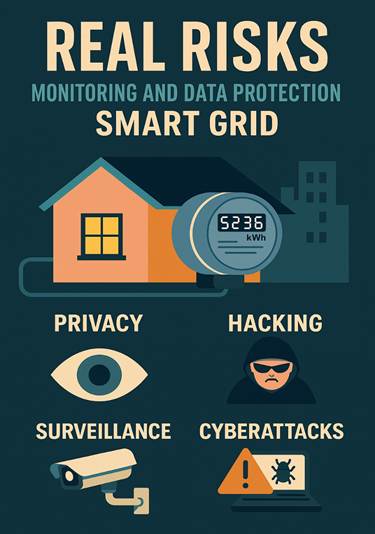
- What Could Go Wrong? Threats to Your Smart Meter Privacy
Smart meters bring plenty of benefits—but here’s what can keep Aussies up at night:
Major Electricity Usage Tracking Risks
- Profiling and Targeting:
Usage data can unveil personal habits to hackers or marketers.
- Break-In Risks:
Accessed data might showcase when your house is unoccupied.
- Unwanted Surveillance:
Authorities or insurers might access your data without consent.
- Hacking and Cyberattacks:
Smart grids are vulnerable points for cyber intrusions.
How to Protect Smart Meter Privacy in Australia
- Things to Do to Reduce Electricity Usage Tracking Risks
Stressed over your smart meter privacy? Don’t be! Instead, start following these easy yet effective steps –
Steps for Protecting Data on the Smart Grid
- Review Your Consent:
Consult your energy retailer for an agreement copy of your data use policy. Decline third-party data sharing wherever allowed.
- Update Device Security:
Make sure that your meter has the latest security patches and firmware (consult with your provider if unsure).
- Track Your Usage Logs:
Many energy retailers provide online portals. Verify who has accessed your data and when.
- Ask About Data Retention:
Inquire about how long your data is retained – and request its removal if permitted.
- Report Concerns Promptly:
Suspect an unauthorized data incident? Reach out to the OAIC (Office of the Australian Information Commissioner).
Do you want to explore the flip sides of smart meters? Consider checking out our blog, “Benefits of Smart Meters for Australian Households.”
FAQs About Smart Meter Privacy
- Does a Smart Meter Know When I’m Home?
Yes, in several cases, usage patterns can indicate when a house is occupied. This is why smart meter privacy is so paramount!
- Who Can Legally Access My Electricity Usage Data?
Grid operators and energy retailers – plus any third parties you consent to. Take out time to thoroughly review the data sharing agreements.
- Can I Decline a Smart Meter in Australia?
In most states, smart meters are mandatory for new installations, but you can put a cap on your data sharing through your provider.
Smart Meter Privacy: Why It’s Crucial for Aussies
Smart meters bring efficiency and cost benefits – but also raise questions about data security. By gaining a thorough understanding of the privacy risks related to smart meters and taking early action, you can take charge. Always remember, your data must serve your purpose – not expose them!
Curious to learn more? Read our guide on “Benefits of Smart Meters for Australian Households” to seal the deal.
