
Are you stuck with a loan, which is draining your wallet? If yes, then it’s high time that you refinanced your home loan and bounced back in 2026! But what should you do to refinance home loan?Let’s quickly break it down—refinancing is not just a random buzzword. It’s rather a strategic move to regain your control over your finances, unlock your home equity, and save thousands over your loan’s lifespan.
Brace yourself to discover smart ways of streamlining your home loan refinancing process—be it for switching lenders for better outcomes or understanding how a break free may impact your move!
A Quick Overview
This blog on how to refinance home loan in 2026 can help every homeowner in Australia explore more effective ways to compare, save, and bag better mortgage deals. You will also discover how to weigh up switching lenders, estimate break fees, and discover the potential of your home equity – everything explained in clear, actionable steps.
What Does It Mean to Refinance Home Loan?
If you believe that refinancing is just another financial buzzword, you're missing out! It’s actually a powerful tool, which allows you to take charge of your mortgage. In 2026, more Australians are trying to explore how to refinance home loan for more flexibility, lower costs, and greater access to new features.
In case you are wondering if it’s right for you, then it’s important to understand the basics of the best places to begin with –
- Explained in Simple Words
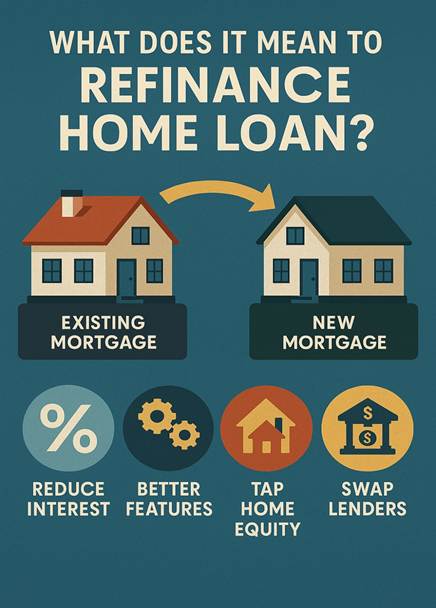
When you refinance home loan, you switch your existing mortgage for a new one, either with your current bank or a new lender. Some of the key causes Australians do this include the following –
- Reducing interest rates: Save on monthly repayments.
- Accessing better features: Like offset accounts or redraw facilities.
- Tapping into home equity: Free up cash for investments, renovations, or big expenses.
- Swapping lenders: Consider moving to a bank with better service or more effective loan terms.
How Does the Refinance Home Loan Process Work?
- Research and Compare: Make sure that you start using calculators to witness how much you could save.
- Check the Break Fee: Your old lender might end up charging you for leaving early.
- Apply with a New Lender: Consider submitting updated financials (including, pay slips, ID, etc.).
- Get Approval and Settle: Your new lender pays off your old loan, and your new loan kicks in.
Expert Take: “Keep in mind, refinancing isn’t only about chasing the lowest rate. Rather, it’s about looking at the fees, flexibility, and your long-term objectives.” — Sarah Megginson, Senior Finance Editor, Finder
Why Are Australians Switching Lenders in 2026?
In 2026, the mortgage market in Australia will be buzzing with activity as more and more borrowers consider switching lenders for optimum value and flexibility. Increasing living expenses and brand-new offers from banks mean that being loyal to your current lender may no longer be the best move.
In case you are looking to make your money work harder, now could be an ideal time to thoroughly review your options and check what’s on offer.
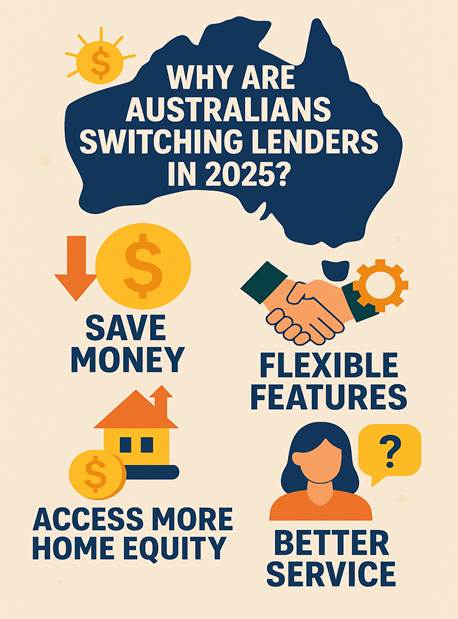
- Key Benefits of Refinancing
- Save Money:
Even a 0.5% drop in your rate can mean thousands in savings.
- Flexible Features:
New loans might offer offset accounts or slightly lower fees.
- Access More Home Equity:
Rising property prices mean that your residence could unlock extra funds.
- Better Service:
Not delighted with your bank? You’re not stuck!
When Is the Ideal Time to Refinance Home Loan?
- Interest rates have dropped.
- Your fixed period is coming to an end (watch for that break fee!).
- You want to consolidate debts.
- Your property value has reached the roof, enabling you to tap into extra home equity.
Did you know, according to CoreLogic, more than 30% of Australian borrowers refinanced in 2024 as lenders ramped up cashback offers? Are you still uncertain whether now is the perfect time? Skim through the next section, which breaks down the benefits and costs with a handy table!
Key Costs and Savings: Refinance Home Loans in Australia
The moment you decide to refinance home loan, you should emphasize balancing out the upfront costs against long-term perks. Many Australians are shocked to see how much they could save every year, even upon paying a break fee or switching fees. By drawing a comparison between your old and new loan, you’ll instantly spot the true value of refinancing.
- Quick Comparison Table: Old vs. New Home Loan
| Criteria | Current Home Loan | After Refinance (2026) |
| Interest Rate | 6.10% | 5.50% |
| Monthly Repayment | $2,150 | $2,000 |
| Annual Saving | – | $1,800 |
| Break Fee | $700 | $0 (after fixed period) |
| Extra Home Equity Access | $0 | $50,000 (cash out) |
Pro Tip: Make sure that you always compare the break fee as well as upfront costs against your long-term savings prior to making the move.
How to Refinance Home Loan: Step-by-Step in 2026
So, are you ready to take the plunge and refinance home loan in 2026? The entire procedure is a lot simpler than many think, but getting the optimum deal means following a proven step-by-step approach. Backed by the right strategy, you can save your time, keep costly mistakes at bay, and demystify the major perks of switching lenders or accessing your home equity.
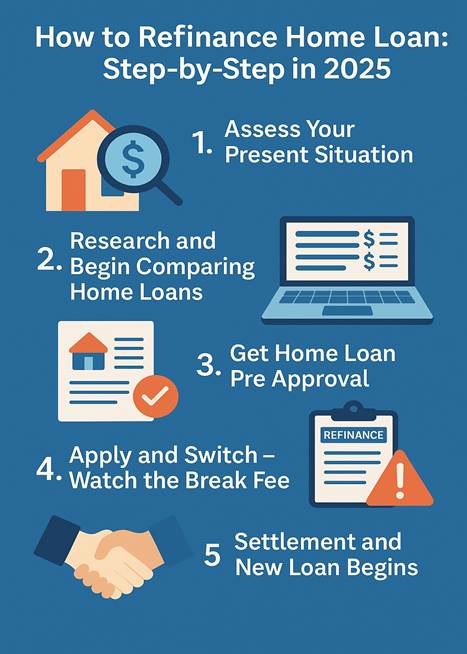
1. Assess Your Present Situation
- Know your home equity: How much is your house worth vs. what you owe?
- Consider checking your credit score and income.
- Ensure that you thoroughly review your loan features and fees.
2. Research and Begin Comparing Home Loans
- Use online platforms to compare home loans from the leading banks and non-banks.
- Look for special refinance cashback, offers, or waived fees.
3. Get Home Loan Pre Approval
- Consider applying for a home loan pre approval to explore your borrowing power before you formally refinance.
- Obtain your documents: ID, property valuation, payslips, and bank statements.
- Apply and Switch – Watch the Break Fee
- Submit a refinance application.
- Make sure that you’re fully aware of the break fee and any discharge/settlement costs.
5. Settlement and New Loan Begins
- New lender pays off your old loan.
- You should begin to make repayments on your new deal!
FAQs: Refinance Home Loan in Australia 2026
1.What papers do I need to refinance my home loan?
You will need proof of insurance, ID, payslips, recent loan statements, and information on the property.
2. If I work for myself or have a low-doc home loan, may I refinance?
Yes, for sure! A lot of lenders will give you a low doc house loan, but you will need to provide them BAS statements or letters from your accountant.
3. How long does it take to refinance in 2026?
Usually, it takes 2 to 4 weeks, although it may take longer if the loans are complicated or if the appraisals are late.
4. Will there always be a fee for breaking?
Only if you have a fixed-rate loan and leave before the term ends. Most of the time, variable loans don't have any exit charges or have lesser ones.
Understanding how to refinance your house loan is important if you want to make the most out of your mortgage in 2026, whether you're self-employed, transferring banks, or looking for improved features.
Pro Tips: Avoid Common Refinancing Errors
Even the savviest borrowers can trip up at the time of the refinance home loan process if they overlook some critical details. Avoiding classic pitfalls can actually help you secure real savings and peace of mind while switching lenders. Put these tips to practice to sidestep costly mistakes and make your next move with total confidence.
- What Should You Watch Out For?
- Not comparing more lenders: Don’t just check your own bank.
- Missing hidden fees: Carefully read the fine print!
- Ignoring the overall cost: Include government charges, valuation fees, and the break fee.
- Stretching your loan term: You may pay more interest overall.
The Final Words
Refinancing your home loan in 2026 could be your smartest financial move if you compare carefully, decode the true costs, and act at the right time. Backed by the right strategy that includes options such as low doc home loans, etc., you can unlock better rates, flexible features, and true savings for years to come.
