
Are you considering a career in real estate? Many people in Australia have done it by buying houses. Many Aussies have done it with investment home loans. From interest rates and loan features to repayment structures, it can boost your property investment loan returns.
Unlike regular loans, these come with perks like negative gearing and other tax benefits. If you’re serious about property investment, understanding how these loans work could be your first step toward financial freedom.
A Quick Summary:
This guide makes investment home loans simple. Through this blog, you’ll learn how to find the best property investment loan. We’ll also explain how negative gearing can help lower your tax bill. You'll learn how to evaluate the rates, features, and structures that will help you maximize your returns while minimizing your risks.
What Are Investment Home Loans?
Investment home loans help people buy property to rent out, not to live in. The goal is to make money from rents and possibly capital growth.
How It Differs from a Regular Home Loan
Normally, banks look at if you can pay back a loan for your own house. But for houses you buy to rent out or fix up and sell, the rules are entirely different.
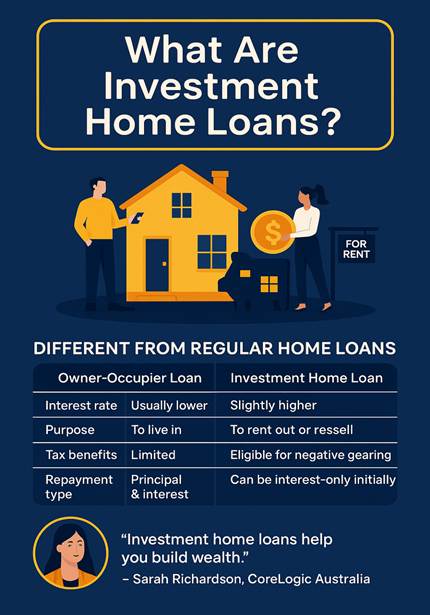
| Feature | Owner-Occupier Loan | Investment Home Loan |
| Interest Rate | Usually, lower | slightly higher |
| Purpose | To live in | To rent out or resell |
| Tax Benefits | Limited | Eligible for negative gearing |
| Repayment Type | Principal & Interest | Can be interest-only initially |
These differences affect both your borrowing power and your long-term return strategy.
Expert Quote: "Investment home loans help you build wealth. Features like negative gearing and interest-only repayments can make property investment a sustainable income strategy when used wisely." — Sarah Richardson, CoreLogic Australia (2024)
How Investment Home Loans Work
Knowing how these loans work helps investors make wiser and more profitable decisions.
1. How Investment Loans Work
An investment home loan is for buying a property to rent out. There are two main types.
- Principal & Interest: You pay back the original loan amount and interest with each payment. This is the most common.
- Interest-Only: For the first few years (3 to 5), you only pay the interest. This can help investors keep more cash early on.
2. What is Negative Gearing?
This is a strategy for Australian property investors. Negative gearing means your rent doesn't cover your loan payments. You can often use these losses to lower your taxable income for a while.
3. How Lenders Decide if You're Eligible
Lenders look at a few things:
- Expected rental income
- Your debt-to-income ratio
- Your credit history and savings.
- The property's location and type.
Some lenders even change how much they'll lend based on the expected rent.
What to Compare When Choosing an Investment Home Loan?
Comparing is the smartest way to be sure you're not overpaying or missing even better features.
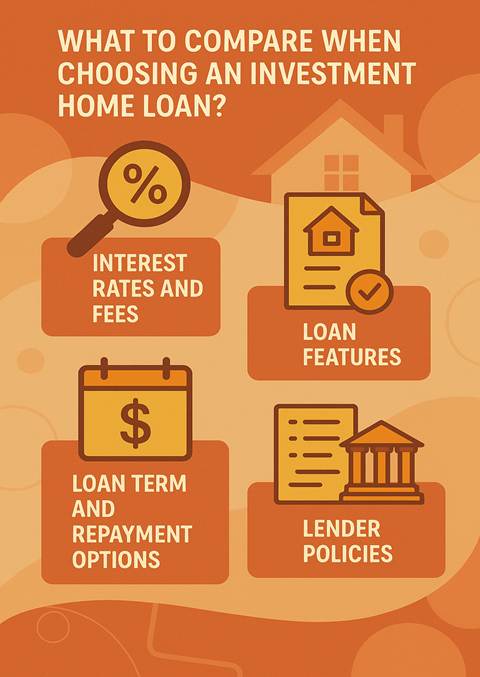
1. Interest Rates and Fees
Even a small difference in interest rates can save or cost you a lot of money. Always check:
- Compare interest rates and home loans.
- Opt for either fixed or variable rates based on your financial situation.
- Even small interest rate differences impact your total loan cost.
2. Loan Features
When choosing a loan, look for features like:
- Offset accounts: Reduce interest paid by linking savings.
- Redraw facilities: Access extra payments you've made if needed.
- Interest-only options: Temporarily pay only the interest, not the principal.
These features offer more control over your loan repayment strategy.
3. Loan Term and Repayment Options
Many investors start with interest-only repayments to improve cash flow and then switch to principal & interest in order to build equity. Some lenders will allow different combinations through the use of a split home loan.
4. Lender Policies
Lenders have specific rules for:
● Borrower's investment experience
How Do You Choose the Right Investment Loan for You?
Your best investment home loan depends on your investment goals and your risk tolerance.
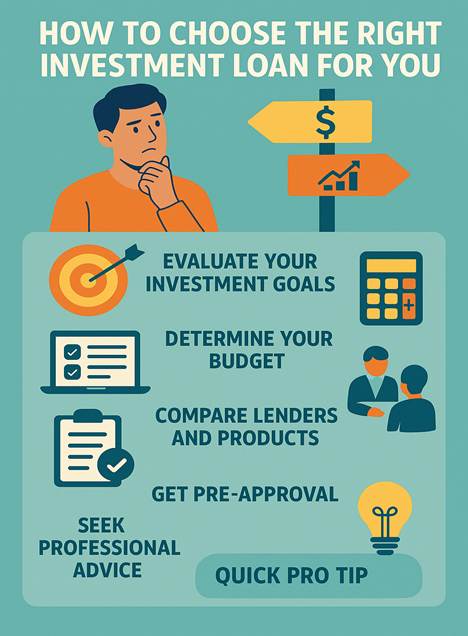
A Quick Glance at the Step-by-Step Solutions
- Evaluate your investment goals: Is your objective cash flow or capital growth?
- Determine your budget: It should include maintenance, insurance, and vacancy costs.
- Compare lenders and products: Use trustworthy comparison tools. For example, it is easy to compare home loans online.
- Get pre-approval: It explains the limit of your borrowing capacity.
- Seek professional advice: Get advice from a mortgage broker about the setup and tax effects.
Quick Pro Tip
First-time property investors should read a guide on first home buyer loan. It covers credit checks and rate comparisons.
How to Maximize Returns on Your Investment Loan?
Long-Term Capital Growth
Search for suburbs that have a high rental demand and low vacancy rates. It should undergo infrastructure growth. This will ensure your property appreciates as your loan balance decreases.
Review Your Loan Regularly
Review your rate and structure every couple of years. Refinancing your investment home loan can save you thousands.
Example: Dropping from 6.5% to 6.2% on a $700,000 loan would save over $1,500 a year.
The Debt/Equity Balance
Use your growing equity to:
- Buy another property.
- Renovate and raise rents.
- Refinance for a better deal.
This is the strategy behind successful Australian property portfolios.
FAQs Regarding Investment Home Loan
1. What’s the simplest way to explain an investment home loan?
Think of the investment home loans as a financial springboard for property investors. Instead of buying a home to live in, you buy one to rent out. It’s a smart way to grow wealth over time, especially if the property’s value rises while your loan balance reduces.
2. Is negative gearing still worth it in today’s market?
Yes, but only if you play it strategically. Negative gearing means your rental income doesn’t fully cover your expenses. It’s a long-game move that makes sense when your property’s value grows enough to offset those early losses.
3. What should I look for when comparing property investment loans?
When reviewing anyproperty investment loan, always focus on three things:
- Interest rates: A small change here means huge differences over time.
- Loan flexibility: Features like redraw and offset accounts can be lifesavers.
- Lender policies: Some lenders love investors. Others are stricter.
4. Can I mix fixed and variable rates to manage risks?
Totally! Lots of smart folks go for a single home loan. That means part of their loan has a fixed interest rate, so repayments are super stable. The other part has a variable rate, which could mean lower payments when rates drop.
5. How can new investors avoid common mistakes?
Start small. Understand your cash flow before chasing big returns. Avoid overstretching your budget. Rate hikes or vacancy dips can catch even seasoned investors off guard.
The Final Words
Purchasing a house for rental purposes requires more than just the physical structure; it requires a strategic approach. A good loan can actually help you make more money, save on taxes, and grow your collection of properties without taking on too much risk.
The best investors don't just jump in. They do their homework, compare their options, and regularly check in on things. Whether it's your first rental or another one for your collection, remember this golden rule: think of your loan as your most important partner in this whole investment journey.
